
Practical Life Skills
Montessori practical life skills foster foundational development in independence, concentration, coordination, responsibility, and self-confidence. These activities prepare children for real-world tasks while strengthening executive functions like task initiation, organization, and problem-solving.
These daily life skills, begin with learning how to control body movement, by walking on a line, working up to walking on a line with a beanbag on their head or holding a small bell so as not to create a ring from it, to cleaning up spills, sweeping the floor and dusting the classroom shelves.
Through self-care and environmental care, children build self-reliance and initiative. Multi-step tasks, such as pouring or folding, develop the sustained concentration necessary for academic success, while activities involving tongs or buttons refine the motor control required for writing.
Ultimately, the order and precision practiced in these daily tasks provide the logical framework for future learning in reading, writing, and mathematics.
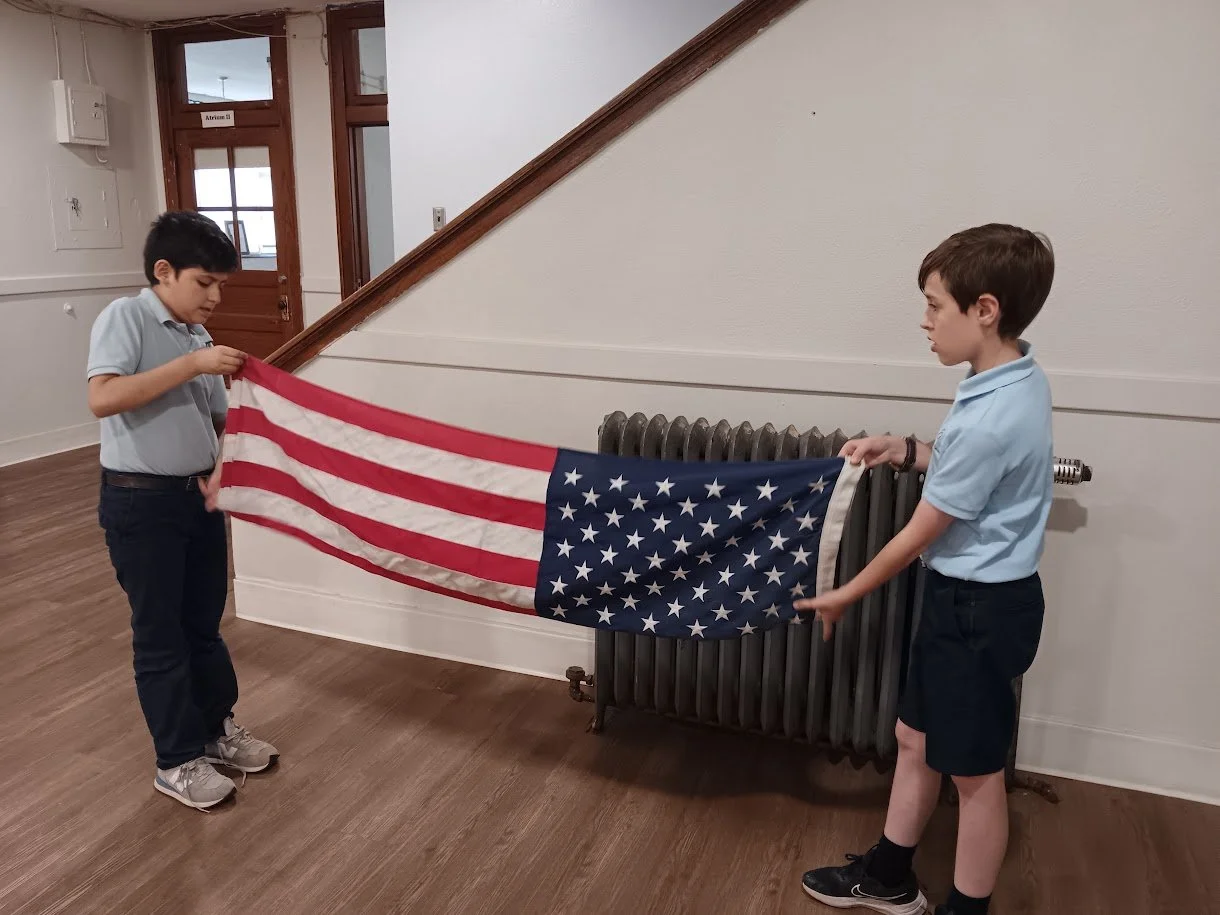
As the students move to our Elementary classrooms, practical life skills lead to to hand sewing, knitting, crochet, leather making, and coming soon: wood working, machine sewing, cooking and baking.
Practical Life skills in the Elementary years foster independence, responsibility, and executive function. As students transition to complex, real-world tasks, these activities continue to develop self-discipline and problem-solving through hands-on experiences like planning field trips, cooking, and needlework, knitting, crocheting, leatherworks and woodworking.
Key outcomes of this curriculum include:
- Increased responsibility for self and community.
- Enhanced executive function through time management and organization using work journals.
- Deeper community engagement via service projects and collaboration.
- Real-world application of academic concepts, such as math and science.